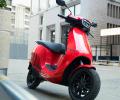
Ola Electric, India's largest electric vehicle company, has achieved a significant milestone by becoming the first two-wheeler automotive electric vehicle (EV) manufacturer in India to receive incentives under the Production Linked Incentive (PLI) Scheme for Automotive and Auto Component (PLI-Auto Scheme). The company has been granted a total incentive of Rs 73.74 crore for the Determined Sales Value of FY 2023-24 under the scheme, according to a stock exchange filing by the company.

Blue Energy Motors, a Mumbai-based outfit, is set to disrupt the market for two million heavy-duty trucks running on diesel and petrol in the case of routes under 500 km by transforming them into electric.

Maruti Suzuki Chairman R C Bhargava is pushing for increased government incentives for biogas-powered vehicles over hybrids, emphasising their net-zero carbon emissions and the valuable organic manure they produce, while also advocating for continued GST benefits for electric vehicles.
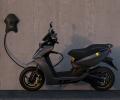
The soaring prices of metals like lithium, nickel and cobalt, which are the primary constituents of the cell, as well as supply chain bottlenecks, are also pushing up the cost of batteries

Korean automaker Hyundai Motor Group (HMG) is vigorously aiming to establish a robust presence in India's electric vehicle (EV) segment through the introduction of new models and the establishment of charging stations under Hyundai Motor India (HMIL) and Kia India. Euisun Chung, executive chairman of HMG, who is currently visiting India, urged both companies to deliver products that not only meet but exceed customer expectations on time, thus driving the achievement of these growth targets. The group is strategically working to elevate Kia's market share from the current 6.7 per cent to an impressive 10 per cent in India in the near future.

Rajasthan Governor Haribhau Bagde highlighted ethanol's potential to protect India from volatile petroleum markets and geopolitical risks, advocating for its widespread production and use. He, along with other officials, emphasised ethanol's role in strengthening the rural economy, ensuring timely cane payments, and combating carbon emissions, while also discussing its historical context and current government support.

TVS Motor Company has emerged as India's largest two-wheeler manufacturer by total sales volume in June 2026, surpassing long-standing leaders Hero MotoCorp and Honda Motorcycle & Scooter India, primarily driven by its strong international business performance.

The investment will be made through a joint venture with Toshiba and Denso. The battery is the most expensive single part of an EV.

The market capitalisation of these 41 companies ranged from Rs 30 crore to around Rs 1.26 trillion, as on August 7.
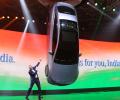
The first all electric Mercedes AMG launched in India
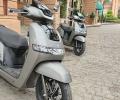
India's electric two-wheeler market has seen record penetration, exceeding 11.2 per cent, driven by crude oil price fluctuations. This surge has led to an unexpected crisis for Indian OEMs, with unfulfilled customer demand reaching 20-30 per cent and average waiting periods exceeding four weeks, a situation expected to intensify during the upcoming festival season.

Repeated increases in new luxury-car prices, driven partly by the rupee's depreciation against the euro, are expanding the market for certified pre-owned vehicles.

Ola Electric Mobility Ltd is redirecting 575 crore from its initial public offering (IPO) proceeds, originally earmarked for research and product development, towards debt repayment and organic growth initiatives, signalling mounting pressure on the electric-vehicle maker.

"There is a sharp jump that we have seen in bookings of EVs... The jump, at least in our case, in just two months, it is about 2 to 2.5 times of what it used to be"
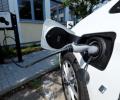
While traditional automakers in India are reeling under a global shortage of semiconductors, the country's electric vehicle (EV) makers, too, are now facing a shortage of lithium-ion batteries, a key raw material. The soaring prices of metals like lithium, nickel and cobalt, which are the primary constituents of the cell, as well as supply chain bottlenecks, are also pushing up the cost of batteries. Battery manufacturers say that prices have been increasing every quarter since the beginning of 2021.

From EV bus expansion to airport-like terminals and rural connectivity, Uttar Pradesh is overhauling public transport to cut pollution and ensure every village has modern, affordable travel, reports Siddharth Kalhans.

Mahindra Racing CEO Frederic Bertrand has stated that while Indian reserve driver Kush Maini has the potential to become a Formula E driver, the team will not compromise its competitive ambitions for nationality.
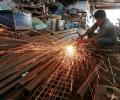
India's industrial production saw a 5.2 per cent increase in February, primarily fuelled by a significant improvement in the manufacturing sector, with 14 out of 23 industry groups recording positive growth.

'Improved law and order and transparent governance have helped change UP's investment image.'
India's electric two-wheeler (e2W) market is consolidating, with established manufacturers TVS Motor, Bajaj Auto, and Hero MotoCorp, alongside EV specialist Ather Energy, driving nearly 96% of incremental registrations in the first half of 2026, while former market leader Ola Electric experienced a significant decline in registrations.

The luxury carmaker plans to drive growth through local assembly of the MINI Countryman, expansion into 10 new cities and a broader product portfolio.

It is about proving that the agency can still deliver when the stakes are high.

'I am now driving an electric vehicle. I have lost faith in petrol-run cars.'

Vietnamese automobile major VinFast is rapidly expanding its retail network in India, aiming for 75 dealerships across 60 cities by the end of 2026, while also building a comprehensive EV ecosystem.

Accel's early investment in RentoMojo, a furniture and appliance rental platform, has paid off handsomely with the company's strong debut on the stock exchanges, listing nearly 19 per cent above its issue price after a significantly oversubscribed IPO.

The government on Wednesday approved a Rs 7,280 crore scheme to promote manufacturing of rare earth permanent magnets, a move which would help reduce India's dependence on China.
Under FAME-II, automakers provided subsidies to electric vehicle (EV) customers at the time of purchase, with the understanding that the government would reimburse the firms later.

French automotive component maker Valeo on Wednesday said it will invest over Rs 2,150 crore in India and treble its annual sales in the country to around Rs 7,510 crore by 2028.
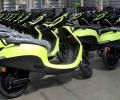
India's electric two-wheeler (e2W) manufacturers have urged the government to extend subsidies under the PM E-Drive (Electric Drive Revolution in Innovative Vehicle Enhancement) scheme beyond March 2026, cautioning that a withdrawal could slow near-term demand even as confidence in long-term electric mobility adoption remains intact.

'The market is currently neither cheap enough to be exciting about nor expensive enough to worry about.'

Hyundai Motor India Ltd (HMIL) announced plans to make Tamil Nadu its 'flagship EV hub for India', committing over 26,000 crore in investment, enhancing localisation, and creating approximately 2,000 additional jobs over the next five to six years. The company will roll out two new EV models from its Chennai facility this year, including its first mass-market dedicated EV.

Mahindra & Mahindra (M&M) is implementing a comprehensive, multi-layered strategy to fortify its supply chains against geopolitical volatility, logistical challenges, and regulatory risks, drawing lessons from recent global disruptions.
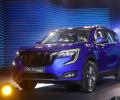
Mahindra & Mahindra (M&M) is largely bullish among analysts following its Q4FY26 results, driven by strong SUV demand, a robust product pipeline, and improving growth visibility across segments, despite near-term margin pressures from rising commodity costs and potential weakness in the tractor cycle.

Tata Motors' commercial vehicle business is increasingly focusing on parts, services, connected-vehicle platforms, and digital businesses to drive growth and reduce dependence on cyclical vehicle sales, as outlined in its FY26 annual report.

Passenger vehicle dispatches from companies to dealers declined 9 per cent year-on-year to 321,840 units in August.

The 63-seater open-top bus, manufactured by Ashok Leyland's arm Switch Mobility, was gifted to the city's tourism department as a corporate social responsibility initiative.
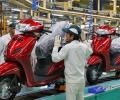
Honda Motorcycle & Scooter India (HMSI) plans to create over 3,800 jobs and expand its annual two-wheeler production capacity to 80 lakh units by 2028, reinforcing India's role as a global manufacturing and export hub for Honda.
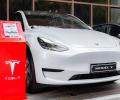
The Delhi high court has granted interim injunction in favour of US-based Tesla Inc by directing Indian company Tesla Power India not to use trademarks 'Tesla Power' or 'Tesla Power USA' in any form, including manufacturing of electric vehicles.

The 515 Army Base Workshop in Bengaluru has signed multiple strategic MoUs to bolster indigenous drone manufacturing and ecosystem resilience, marking a significant step towards modernisation and self-reliance in unmanned systems.
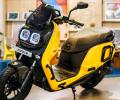
India's home-grown EV startups say the government's auto PLI scheme is helping big players while shutting out innovators building electric two- and three-wheelers from scratch.
